

HueSense
Clarity in every hue.
Creating a more accurate and inclusive way to discover your perfect makeup shade.
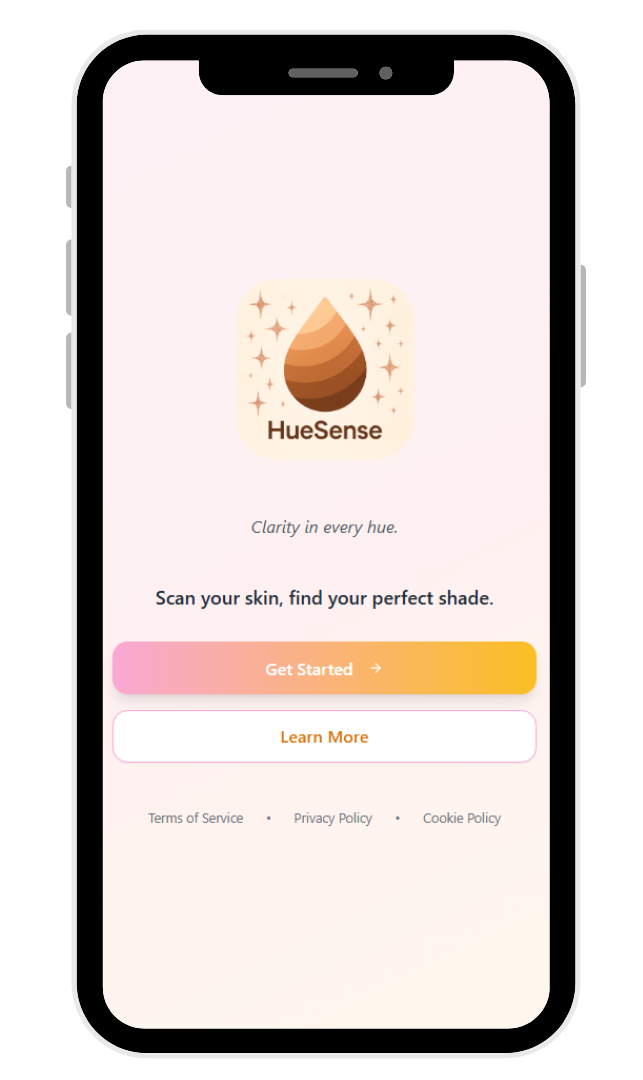
HueSense is an AI-powered skin tone scanner paired with a mobile app that analyzes tone and undertone to provide personalized makeup shade recommendations. The project addresses shade-matching frustration caused by inconsistent lighting, subjective observation, and non-standard shade systems across beauty brands.
Project Overview
Product Designer
Responsibilities included product concept development, UX strategy, visual direction, feature planning, and prototype exploration.
My Role
Tools Used
Figma, AI product concepting, prototyping, visual design

The Problem
Makeup shade matching is often inconsistent and frustrating, especially for customers with underserved skin tones. Poor lighting, subjective judgment, and inconsistent brand shade systems can lead to mismatches, low confidence, and higher product returns.
The Solution
HueSense combines hardware and app-based guidance to provide lighting-independent skin analysis, undertone education, personalized shade recommendations, and support for both in-store retail and at-home use.
Design Process
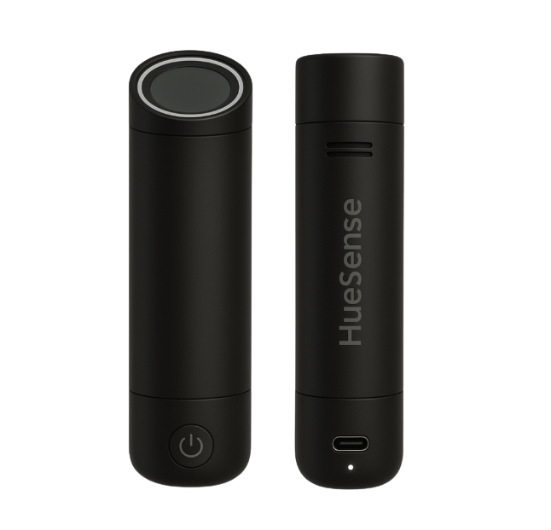
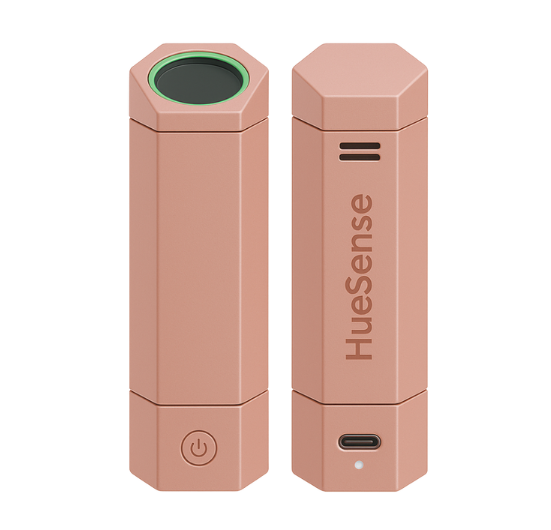
The project explored two product directions: a sleek, universal prototype and a more playful geometric prototype. The design was developed as a flexible system that could work in retail consultations and at-home shade discovery or reordering.
Prototype 1
Sleek & Universal
Prototype 2
Fun & Geometric

Product Principles
HueSense is built around four principles: inclusivity, clarity, confidence, and personalization. Inclusivity is treated as a foundation of the AI system, clarity helps users understand why a shade works, confidence reduces second-guessing, and personalization allows the experience to evolve with the user over time.
Conclusion & Next Steps
HueSense shows how product design can combine hardware, AI, education, and inclusive UX to solve a long-standing beauty industry problem while supporting both user confidence and retailer efficiency.
The next phase should define an MVP feature set, prototype the full end-to-end app experience, test accuracy across lighting conditions, conduct usability testing with a wider range of skin tones, and refine AI training metrics for undertone precision.